
 IDN
IDN
 ENG
ENG 

The Indonesian automotive market is undergoing significant changes, particularly in how customers perceive after-sales service. As income levels rise and vehicle ownership increases, customers increasingly expect services that are efficient, high-quality, and transparent.
Service centers can no longer focus only on repairs. They need to offer a complete experience that combines digital convenience with personal and culturally appropriate interactions.
The main challenge is delivering the same level of quality across service centers in different regions, where infrastructure and skill levels vary. While some areas are able to adopt modern service processes, others still rely on manual systems. This leads to uneven customer experiences.
There is also a gap between what service centers provide and what customers expect. Younger customers tend to prefer digital tools, while others value direct and professional communication. On top of this, inconsistent service quality, unclear pricing, and poor communication reduce customer trust, and supply chain issues make these problems worse.
To provide a better understanding of consumer expectations and the current state of after-sales service delivery in the Indonesian automotive market, we conducted research using AskLumia.
After-sales Service Expectations in Indonesia’s Automotive Market

AskLumia enables you to conduct research on a wide range of topics, including health, lifestyle, business, and more. It delivers comprehensive insights within minutes, making research faster and more accessible.
For this topic, we began by posing a simple prompt: “Analyze Indonesia’s automotive aftersales services to identify gaps between customer expectations and current service delivery.”
Core Research Findings
AskLumia’s insights are integrating insights from internal digital personas, survey data, external web crawling, and user-uploaded content. These points highlight the primary areas of divergence between consumer expectations and the current state of after-sales service delivery in the Indonesian automotive market.
- Internal surveys and external forum discussions converge on the finding that while core service attributes like speed, staff professionalism, and repair quality are critical, their delivery is inconsistent across different brands and service locations, leading to mixed customer experiences.
- A significant point of friction identified in both internal digital persona submissions and external web crawling of customer complaints is the lack of transparent communication, particularly regarding service costs and progress updates, which directly erodes consumer trust.
- Internal persona studies reveal a growing demand for digital integration (e.g., online booking, real-time updates) and personalized service, a trend strongly corroborated by external research, which highlights that leveraging IoT and smartphone technology is key to enhancing customer satisfaction.
- Brand-specific analysis from internal simulations, reinforced by external satisfaction surveys, indicates a clear performance hierarchy. Brands like Toyota and Honda are highly regarded for reliability and professionalism, whereas others like Mitsubishi and Suzuki face challenges related to service accessibility, speed, and parts availability.
Top-Line Recommendations for Aftersales Service Excellence
Based on the research findings, AskLumia has developed a set of top-line recommendations designed to directly address identified gaps in service delivery, communication, and brand perception to improve the overall after-sales experience.
a. Standardizing Service Quality Through Training and Protocols
Automotive brands should standardize service protocols across all locations and invest in robust, continuous training programs for staff. This training must cover not only technical repair skills to improve first-time fix rates but also soft skills focused on professional, empathetic, and culturally sensitive customer communication.
b. Building Trust Through Transparent Pricing and Proactive Communication
To address the trust deficit, service centers must implement standardized, transparent pricing models with clear, upfront cost estimates. This should be paired with a proactive communication strategy, utilizing channels like WhatsApp for real-time service status updates, as suggested by consumer preferences in our internal surveys.
c. Enhancing Customer Experience with Integrated Digital and Personal Service
Companies should develop and deploy an integrated digital platform that allows customers to schedule appointments, track service progress, and provide feedback seamlessly. This technological investment must be balanced with training staff to deliver personalized, hospitable service that aligns with Indonesian cultural expectations of politeness and respect.
d. Closing Service Gaps Through Network and Supply Chain Optimization
Brands with lower satisfaction ratings, such as Mitsubishi and Suzuki, should execute targeted improvement strategies. This includes strategically expanding service center networks to improve accessibility, particularly in rural areas, and optimizing supply chains to reduce wait times for spare parts, thereby addressing key weaknesses identified in both internal and external analyses.
After-sales Service as a Key Driver of Loyalty in Indonesia’s Automotive Market
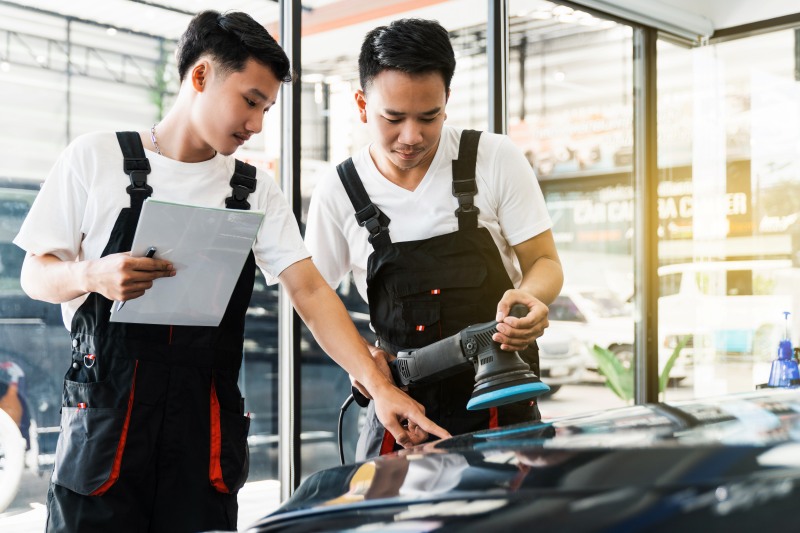
AskLumia’s research shows that after-sales service quality has become a key driver of customer loyalty and brand differentiation in Indonesia’s automotive market. The findings reveal clear gaps in service consistency, communication transparency, and digital integration.
Customers place a high value on speed, professionalism, and repair quality, but inconsistent service delivery continues to undermine trust. Lack of transparent communication, especially regarding pricing and progress, is the most significant friction point. At the same time, customers increasingly expect digital features such as online booking and real-time service updates as part of a modern service experience.
Leading brands such as Toyota and Honda demonstrate that standardized service protocols, continuous staff training, and clear communication play a critical role in building long-term customer loyalty.
To remain competitive, automotive brands must adopt a balanced approach that combines operational standardization, technological innovation, and cultural sensitivity. Standardized protocols help ensure consistent quality, transparent pricing strengthens trust, and integrated digital platforms address the needs of diverse customer segments.
The future of the automotive market will be defined by the quality of the customer experience. Brands that successfully bridge the gap between customer expectations and service delivery will be best positioned to achieve sustainable competitive advantage.
Explore AskLumia’s AI-powered research platform to gain deeper insights into Indonesian consumer behavior and market dynamics to make informed decisions that drive competitive advantage in rapidly evolving markets.
Related article: Electric Vehicle Brand Strategy to Win Indonesian Families