
 IDN
IDN
 ENG
ENG 

In recent years, technology has advanced so rapidly that it has quietly woven itself into people’s daily routines. Today, AI for everyday is no longer just a global trend or an innovation reserved for big tech companies; it has become something familiar and accessible to individuals in their everyday lives.
From helping people search for information, organize schedules, and complete tasks, to supporting entertainment and creativity, artificial intelligence is increasingly functioning as a digital assistant that many rely on.
According to Populix’s latest report on “AI in Everyday Life,” Indonesians are beginning to develop a more personal relationship with this technology.
Why AI for Everyday Matters?
AI isn’t confined to tech labs or high-level enterprise use. It’s part of daily life for a growing number of people.
- Adoption rates: How widely AI is being used in Indonesia’s population (in work, home, etc.).
- Emotional responses: How people feel about using AI, their hopes, fears, and expectations.
- Pros and cons: The benefits (e.g., convenience, productivity) and challenges (e.g., privacy, over-reliance) of having AI play a role in everyday activities.
- Future outlook: What Indonesians expect from the continued development of AI in their lives.
Related article: Gaming Behavior 2025: Inside Indonesia’s Play Habits
Most AI Used for Everyday Life
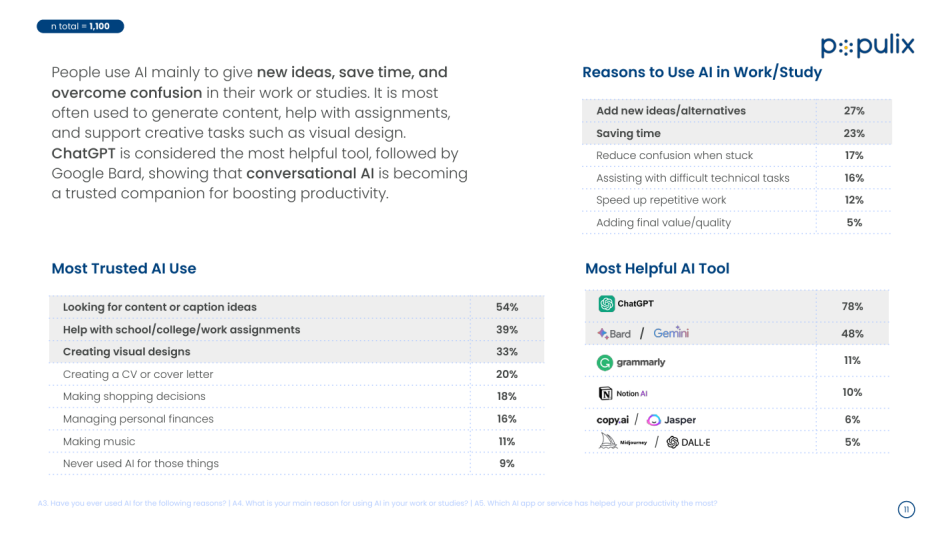
According to the Populix “AI in Everyday Life” report, most people in Indonesia already use AI in simple, practical ways to support their daily routines.
The most common uses include generating new ideas, saving time, and helping users overcome confusion in their work or studies
AI Boundaries
While AI is becoming a helpful tool for everyday activities, the Populix report shows that users in Indonesia still recognize clear boundaries when interacting with AI. Users also express privacy concerns.
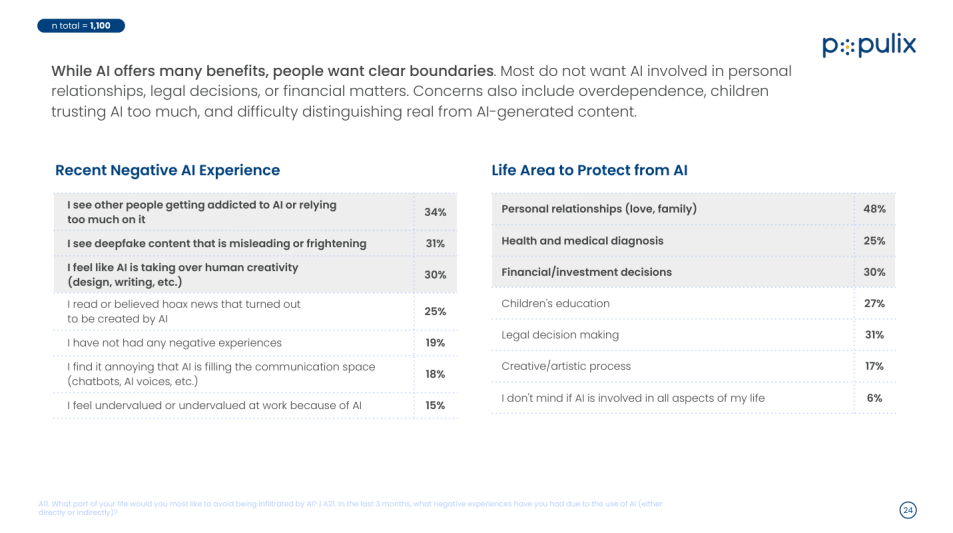
From the report, we can see that the AI for everyday trend reflects a broader global shift: AI is no longer only for tech companies. It is becoming part of how people live, work, and think.
To explore the full insights and data behind these findings, download the “AI in Everyday Life” report for free and read the complete results.
If you’re looking for deeper insights on this or other topics, you can also conduct research with Populix. Don’t hesitate to contact us to learn how we can help your business better understand your audience. Now, Populix can conduct research across the SEA region!

Related article: Uncover Singapore Travel Habits and Tourism Opportunities